
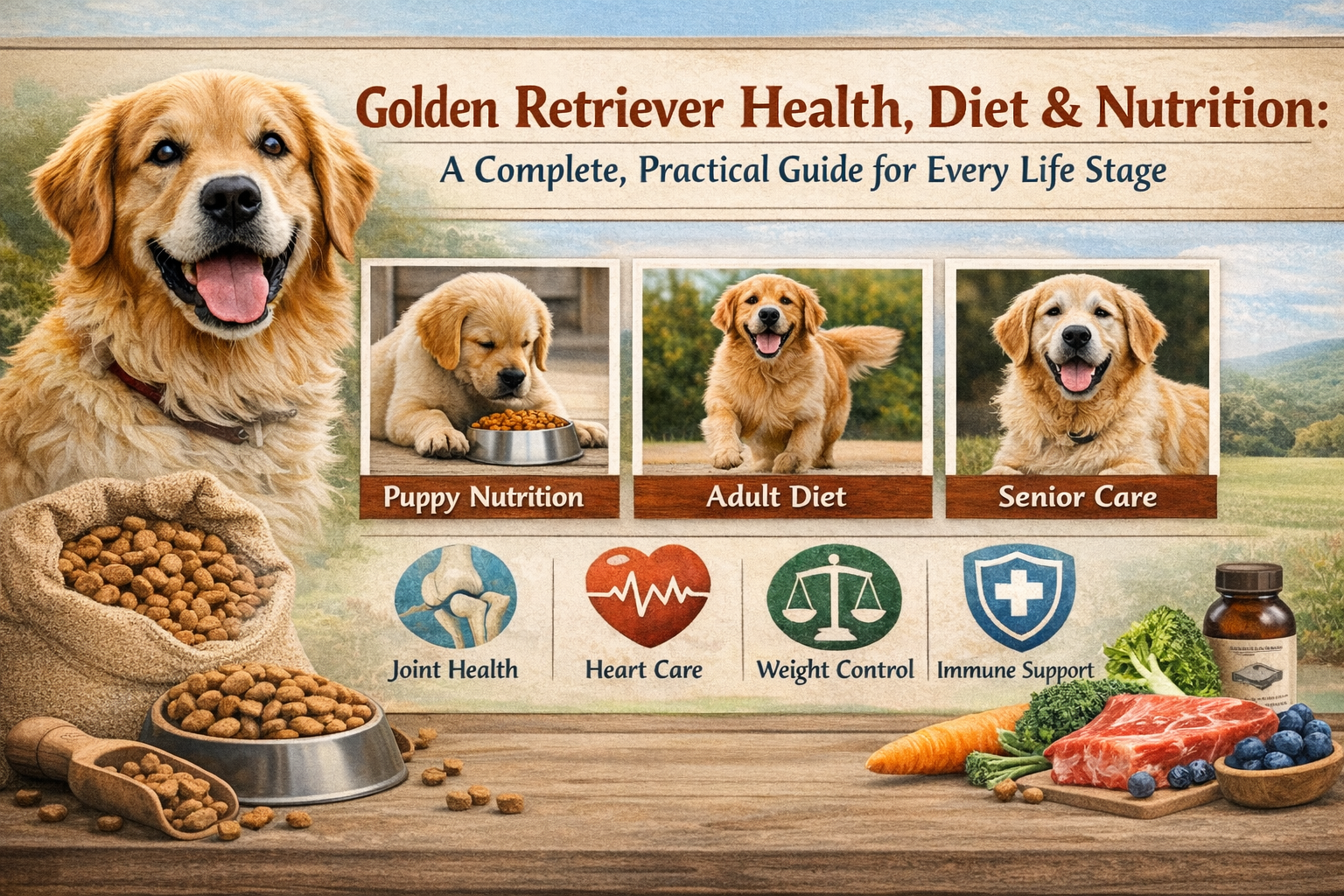
Golden Retrievers are loved for their friendly nature, intelligence, and loyalty. But behind that happy-go-lucky personality is a breed with specific health risks and very real nutritional needs.
What you feed a Golden Retriever and how you manage their lifestyle directly affect their joints, heart, weight, immune system, and overall lifespan.
This guide explains Golden Retriever health, diet, and nutrition in a practical, real-world way.
It’s written for everyday dog owners as well as breeders, trainers, and professionals who want clear, reliable guidance without confusion or hype.
Table of Contents
Golden Retriever Health: Why Nutrition Matters So Much
Golden Retrievers are considered a medium–large breed with a strong appetite and rapid growth in early life.
These traits make them especially vulnerable to nutrition-related health problems.
Common breed-specific concerns include:
- Hip and elbow dysplasia
- Obesity and related metabolic issues
- Heart conditions linked to taurine deficiency
- Skin allergies and food sensitivities
- Higher lifetime cancer risk
Diet doesn’t just fuel energy—it influences inflammation, bone development, organ function, and disease prevention.
Poor nutrition can shorten a Golden Retriever’s lifespan by years, while proper feeding supports mobility, comfort, and long-term vitality.
Core Nutrition Needs of Golden Retrievers
A healthy Golden Retriever diet is balanced, consistent, and appropriate for life stage and activity level.
Ideal Macronutrient Balance
Most healthy Golden Retrievers thrive on:
- Protein: 22–26% from animal sources
- Fat: 12–16% for energy and coat health
- Carbohydrates: Digestible grains or vegetables
- Fiber: 3–5% for gut health and satiety
Essential Nutrients That Matter Most
- Omega-3 fatty acids (EPA & DHA): Joint, heart, and brain health
- Glucosamine & chondroitin: Cartilage and joint support
- Calcium & phosphorus: Controlled levels for bone development
- Taurine: Supports cardiac function
- Vitamin E & zinc: Skin, coat, and immune support
Foods that meet AAFCO nutrient profiles are formulated to provide these essentials in safe, tested amounts.
Common Health Problems in Golden Retrievers (and How Diet Helps)
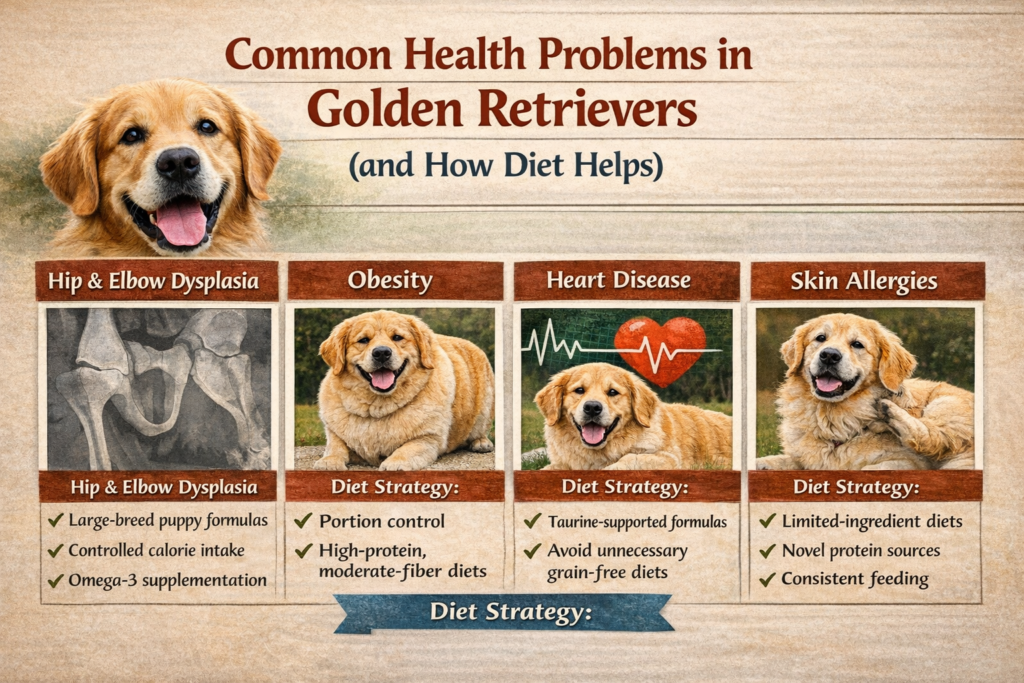
Hip & Elbow Dysplasia
These joint conditions are influenced by genetics and growth rate. Overfeeding puppies or using high-calcium diets increases risk.
Diet strategy:
- Large-breed puppy formulas
- Controlled calorie intake
- Omega-3 supplementation
Obesity
Golden Retrievers are highly food-motivated and prone to weight gain, especially in suburban or apartment lifestyles.
Diet strategy:
- Portion control using a feeding calculator
- High-protein, moderate-fiber diets
- Limited treats (under 10% of daily calories)
Heart Disease
Some Golden Retrievers develop heart issues linked to low taurine levels, particularly on certain grain-free diets.
Diet strategy:
- Taurine-supported formulas
- Avoid unnecessary grain-free diets unless medically advised
Skin Allergies
Food allergies often present as itching, ear infections, or hot spots.
Diet strategy:
- Limited-ingredient diets
- Novel protein sources
- Consistent feeding without frequent switches
Feeding Golden Retrievers by Life Stage

Golden Retriever Puppy Diet (2–12 Months)
Puppyhood is the most critical nutritional phase.
Why it matters: Rapid growth can overload developing joints if calories or minerals are excessive.
Best practices:
- Feed a large-breed puppy formula
- Keep calcium below recommended thresholds
- Divide food into 3 meals per day
Avoid:
- Adult dog food
- Supplements without veterinary guidance
Adult Golden Retriever Nutrition (1–7 Years)
Adult dogs need maintenance nutrition that supports muscle, joints, and a healthy weight.
Key goals:
- Maintain a lean body condition score (BCS)
- Support joint health early
- Adjust calories based on activity
Most adults do well on two meals per day to reduce hunger spikes and begging behaviors.
Senior Golden Retriever Diet (7+ Years)
As Golden Retrievers age, metabolism slows, and joint issues become more common.
Senior nutrition focuses on:
- Lower calorie density
- Higher-quality protein
- Joint and heart support nutrients
- Digestive support
Regular vet blood panels help tailor diet changes appropriately.
How Much Should a Golden Retriever Eat?
Portion size depends on weight, age, and activity.
General daily guideline:
- Adult Golden Retriever: 2.5–3.5 cups of dry food
- Active dogs: Slightly more
- Overweight dogs: Vet-guided calorie reduction
Use a Body Condition Score (BCS) rather than relying only on the scale. You should feel your ribs without pressing hard and see a visible waist.
Commercial Dog Food vs Homemade Diets
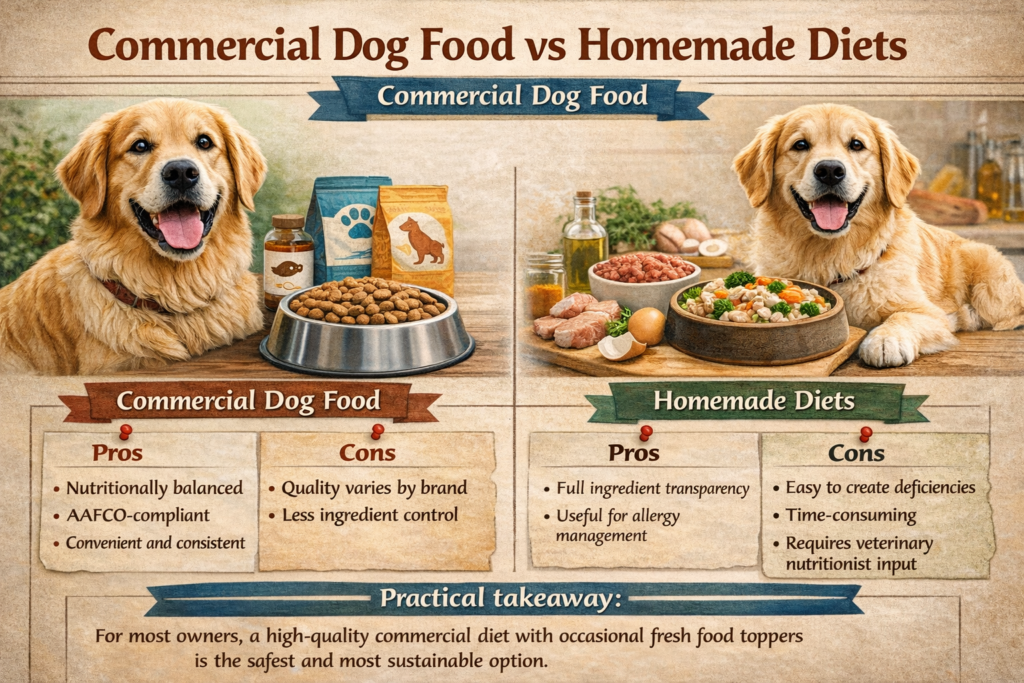
| Easy to create deficiencies Time-consuming Requires a veterinary nutritionist’s input | Commercial Dog Food | Homemade Diets |
| Pros | Nutritionally balanced AAFCO-compliant Convenient and consistent | Full ingredient transparency Useful for allergy management |
| Cons | Quality varies by brand Less ingredient control | Easy to create deficiencies Time-consuming Requires veterinary nutritionist input |
Practical takeaway: For most owners, a high-quality commercial diet with occasional fresh food toppers is the safest and most sustainable option.
Grain-Free vs Grain-Inclusive Diets
This is one of the most confusing topics for Golden Retriever owners.
Grain-free diets are not inherently better. In some dogs, they’ve been associated with heart concerns when not properly formulated.
Grain-inclusive diets:
- Provide digestible energy
- Support taurine metabolism
- They are appropriate for most Golden Retrievers
Only choose grain-free if your dog has a diagnosed grain sensitivity.
Supplements: What Helps and What to Be Careful With
Commonly Beneficial Supplements
- Fish oil (EPA/DHA)
- Glucosamine and chondroitin
- Probiotics
- Turmeric (anti-inflammatory support)
Supplements to Use Carefully
- Calcium (especially in puppies)
- Human multivitamins
- Raw bone products
Always adjust supplements based on diet composition and veterinary advice.
Preventive Nutrition Strategies That Extend Lifespan
- Keep your dog lean throughout life
- Start joint support before problems appear
- Avoid frequent food switching
- Monitor weight monthly
- Schedule annual wellness exams
Nutrition works best when combined with regular exercise, mental stimulation, and preventive veterinary care.
Cost of Feeding a Golden Retriever
Monthly feeding costs vary based on diet type:
- Quality dry food: Moderate cost
- Fresh or homemade diets: Higher cost
- Supplements: Low to moderate additional cost
Nationwide availability through pet stores and dog food delivery services makes consistency easier for most owners.
Common Feeding Mistakes to Avoid
- Free-feeding all day
- Overusing treats
- Feeding table scraps
- Ignoring gradual weight gain
- Sudden diet changes
Small daily mistakes compound into serious health issues over time.
FAQs
Are Golden Retrievers prone to obesity?
Yes. Their strong appetite and lower metabolic efficiency make weight management essential.
What is the best diet for Golden Retrievers?
A balanced, AAFCO-compliant diet with adequate protein, controlled calorie intake, and joint-support nutrients.
Is grain-free food bad for Golden Retrievers?
Not always, but it’s unnecessary for most dogs and should only be used for medical reasons.
How often should I feed my Golden Retriever?
Puppies need 3 meals daily; adults and seniors do best with 2 meals per day.
Do Golden Retrievers need supplements?
Many benefit from omega-3s and joint support, especially as they age.
What should Golden Retrievers never eat?
Chocolate, grapes, onions, garlic, xylitol, and heavily seasoned human foods.
How long do Golden Retrievers live with proper nutrition?
Most live 10–12 years, with some reaching beyond that with excellent care.
Conclusion
Golden Retriever health starts with smart nutrition decisions made early and adjusted over time.
Feeding the right diet, controlling portions, supporting joints and heart health, and avoiding common mistakes can dramatically improve quality of life and longevity.