

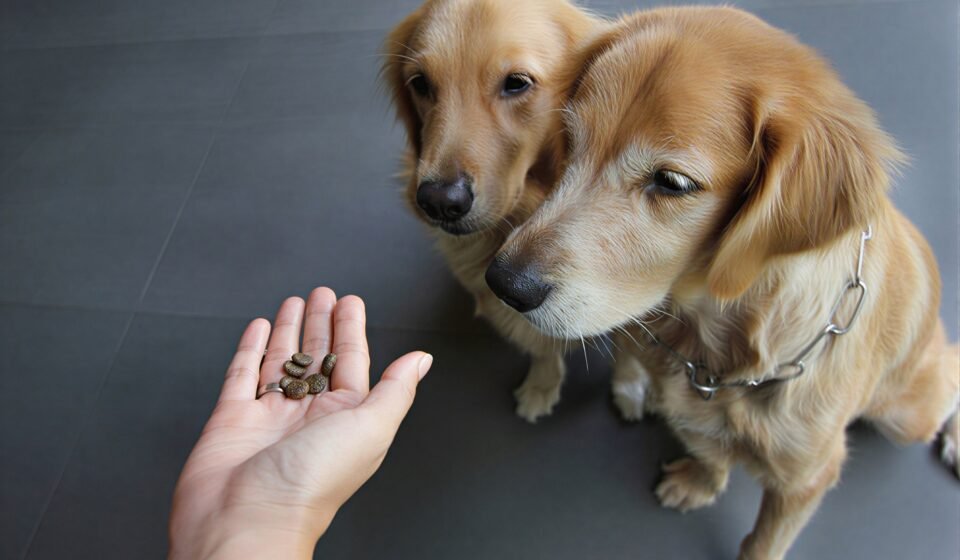

Golden Retrievers are famous for their friendly nature, high energy, and bottomless appetite.
Ask any Golden owner, and they’ll tell you their dog always seems hungry. That’s exactly why knowing how much a Golden Retriever should eat matters so much.
Feeding too little can affect growth, energy, and coat health. Feeding too much is even more common—and far more dangerous—leading to obesity, joint stress, and expensive vet visits later in life.
This guide gives you clear, practical answers so you can feed your Golden Retriever with confidence, not guesswork.
How Much Does a Golden Retriever Eat Per Day?

Most adult Golden Retrievers eat 2 to 3 cups of high-quality dry dog food per day, split into two meals.
That’s the simple answer—but it’s not the complete one.
The exact amount depends on:
- Age (puppy, adult, senior)
- Body weight
- Activity level
- Type of food (dry, wet, or homemade)
- Calorie density of the food
Why Feeding Amount Matters for Golden Retrievers
Golden Retrievers are genetically prone to:
- Obesity
- Hip and elbow dysplasia
- Arthritis
- Reduced lifespan from excess weight
Unlike some breeds that self-regulate, Goldens will often eat more than they need if given the chance. This makes portion control critical.
Even a small daily overfeed—just a handful of extra kibble—can lead to significant weight gain over time. Proper feeding supports:
- Healthy joints
- Stable energy levels
- Strong immunity
- Better digestion
- Longer, healthier life
Golden Retriever Feeding Chart (By Weight)
This chart applies to adult Golden Retrievers eating standard dry kibble with average calorie content.
| Adult Weight | Daily Dry Food Amount |
|---|---|
| 55–65 lbs (25–30 kg) | 2 – 2.25 cups |
| 65–75 lbs (30–34 kg) | 2.5 – 3 cups |
| 75–85 lbs (34–39 kg) | 3 – 3.5 cups |
Always divide the daily amount into two meals.
Feeding a Golden Retriever by Life Stage

Golden Retriever Puppies (2–12 Months)
Golden Retriever puppies grow fast, but shouldn’t grow too fast. Overfeeding during puppyhood increases the risk of hip and elbow dysplasia, which the breed is already prone to.
General puppy feeding guidelines:
| Puppy Age | Meals Per Day | Total Daily Amount |
|---|---|---|
| 2–3 months | 4 | 2.5–3 cups |
| 4–6 months | 3 | 3–4 cups |
| 7–12 months | 2 | 3–3.5 cups |
Use large-breed puppy food that meets AAFCO growth standards. These formulas control calcium and calories to support healthy bone development.
Adult Golden Retrievers (1–7 Years)
Adult Goldens typically need 2.5–3 cups of food per day, divided into two meals.
At this stage:
- Energy needs stabilise
- Activity level becomes the biggest variable
- Treat intake starts to matter more
Active dogs burn calories quickly; sedentary dogs don’t.
Senior Golden Retrievers (7+ Years)
Senior Goldens slow down. Their metabolism drops, but their nutritional needs don’t disappear.
Typical intake:
- 2–2.25 cups per day
- High-quality protein
- Lower overall calories
- Joint-supportive nutrients
Watch weight closely—senior obesity is extremely common in Golden Retrievers.
Adjusting Food by Activity Level
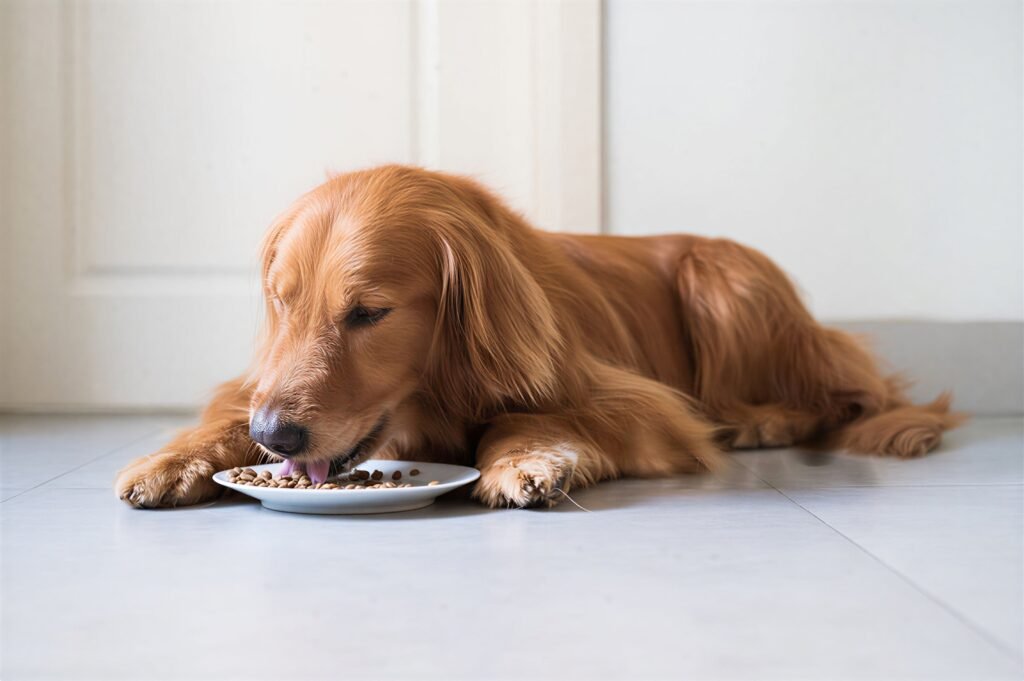
Activity level can change food needs by 10–20%.
| Activity Level | Feeding Adjustment |
|---|---|
| Low (short walks, mostly indoors) | Reduce food by 10–15% |
| Moderate (daily walks, playtime) | Standard feeding range |
| High (sports, hiking, swimming) | Increase food by 10–20% |
A working or highly active Golden Retriever burns significantly more calories than a dog with a relaxed routine.
Dry Food vs Wet Food vs Homemade Diets
Dry Kibble
Pros
- Easy to measure
- Affordable
- Supports dental health
Cons
- Lower moisture content
Most Golden Retrievers do best on high-quality dry food designed for large breeds.
Wet Food
Pros
- More palatable
- Higher moisture
Cons
- Requires larger portions
- More expensive
- Easier to overfeed
If feeding wet food, expect to feed significantly more volume to meet daily calories.
Homemade Diets
Pros
- Full ingredient control
Cons
- Easy to create nutrient deficiencies
- Requires professional formulation
Homemade diets should only be used under veterinary or canine nutritionist guidance.
Dog Food Cups vs Calories: Why Labels Matter
Not all dog foods are equal in calories. Two brands may recommend the same number of cups but deliver very different energy levels.
Always check:
- Calories per cup
- Feeding recommendations on the bag
- Your dog’s actual weight and activity
Premium foods often require smaller portions because they are more calorie-dense.
How to Calculate the Right Food Amount (Step-by-Step)
If you want precision instead of estimates, follow this approach:
- Weigh your dog (or estimate accurately)
- Check the calorie content on the food label
- Start with the recommended range
- Adjust by activity level
- Monitor Body Condition Score (BCS)
Healthy sign: You can feel your Golden’s ribs easily, but they’re not visibly protruding.
Am I Overfeeding My Golden Retriever?
Common signs of overfeeding include:
- Rapid weight gain
- Difficulty feeling ribs
- Loss of waist definition
- Low energy despite high food intake
- Constant begging (yes, even when overfed)
Golden Retrievers are experts at acting hungry. Appetite alone is not a reliable indicator.
Treats, Snacks & “Hidden Calories”
Treats should make up less than 10% of daily calories.
Common mistakes:
- Using treats as snacks and rewards
- Feeding table scraps
- Forgetting training treats adds up
If you give extra treats, reduce meal portions slightly to compensate.
Seasonal Feeding Changes
Many owners overlook this, but seasons matter.
- Winter: Less activity = slightly less food
- Summer: More activity (and heat-related appetite changes) may require adjustment
Reassess portions every few months.
Common Feeding Mistakes to Avoid
- Free feeding (leaving food out all day)
- Guessing portions instead of measuring
- Ignoring calorie content
- Feeding adult food to puppies
- Not adjusting food to age or activity
These mistakes are a major reason Golden Retrievers struggle with weight.
Best Practices for Feeding a Golden Retriever
- Use a measuring cup
- Feed twice daily
- Stick to consistent times
- Track weight monthly
- Adjust food before problems appear
Small changes early prevent big health issues later.
Frequently Asked Questions
How many cups should a Golden Retriever eat a day?
Most adult Goldens eat 2–3 cups per day, depending on weight and activity.
Is 3 cups of food too much for a Golden Retriever?
For large or highly active Goldens, no. For smaller or sedentary dogs, it may be too much.
How often should you feed a Golden Retriever?
Twice daily is ideal for adults; puppies need more frequent meals.
Do Golden Retrievers eat more than Labradors?
Their needs are similar, but Golden Retrievers tend to gain weight more easily.
Can Golden Retrievers eat once a day?
It’s not recommended. Two meals help digestion and reduce the risk.
How do I know if my Golden Retriever is overweight?
If you can’t easily feel ribs or see a waist, weight may be an issue.
Why is my Golden Retriever always hungry?
The breed is genetically food-motivated. Hunger cues don’t always mean true calorie need.
Conclusion
Knowing how much a Golden Retriever should eat isn’t about strict rules—it’s about smart adjustments.
Start with reliable feeding ranges, factor in age and activity, and watch your dog’s body condition instead of the bowl.
Accurate feeding supports healthy joints, stable energy, and a longer life. Measure portions, limit treats, and reassess regularly.
Your Golden Retriever’s future health depends on what—and how much—you put in that bowl.