


This guide covers healthy adult and puppy Golden Retrievers on standard commercial or homemade diets. It does NOT address dogs with diagnosed kidney disease, IBD, cancer, or severe allergies — those dogs need a veterinary nutritionist’s individual plan.
By the Author: Tommy Nelson
Food to feed a Golden Retriever should be a high-quality, large-breed formula with real meat as the first ingredient.
AAFCO-certified for their life stage, and — based on current veterinary guidance — grain-inclusive rather than grain-free to reduce cardiac risk.
That’s the short answer. The longer one matters more.
The Grain-Free Problem Every Golden Owner Needs to Understand
Most feeding guides mention grain-free diets in passing. They say something like “grain-free may cause heart issues” and move on. That’s not enough.
Here’s what actually happened — and why it changes how you should shop.
In 2018, the FDA began receiving an unusual surge in reports: Golden Retrievers, a breed not historically prone to heart disease, were developing dilated cardiomyopathy (DCM).
The common thread wasn’t a single brand. It was a dietary pattern.

A 2020 prospective study published in PLOS ONE by Ontiveros et al. at UC Davis School of Veterinary Medicine found that Golden Retrievers eat grain-free diets.
Legume-rich diets had significantly lower taurine concentrations and more frequent systolic dysfunction compared to dogs on traditional grain-inclusive diets.
Golden Retrievers were the most-reported breed in the FDA’s investigation.
Taurine is an amino acid that dogs synthesize from other dietary amino acids.
The working theory — still being researched — is that legumes like peas and lentils, which replace grain in most grain-free kibbles, interfere with that synthesis process.
Whether it’s a fiber effect, a protein interaction, or something about overall amino acid ratios isn’t fully settled.
Quick note: some grain-free formulas tested perfectly fine in taurine levels. The problem isn’t the absence of grain exactly — it’s the presence of high-legume ingredients as primary fillers.
The practical takeaway for Golden owners: avoid foods where peas, lentils, chickpeas, or potatoes appear in the first five ingredients.
Pick a large-breed, grain-inclusive formula from a manufacturer that follows WSAVA (World Small Animal Veterinary Association) guidelines.
Meaning they employ board-certified veterinary nutritionists and conduct AAFCO feeding trials, not just nutrient analysis.
What AAFCO Compliance Actually Means (And Why Most People Get It Wrong)
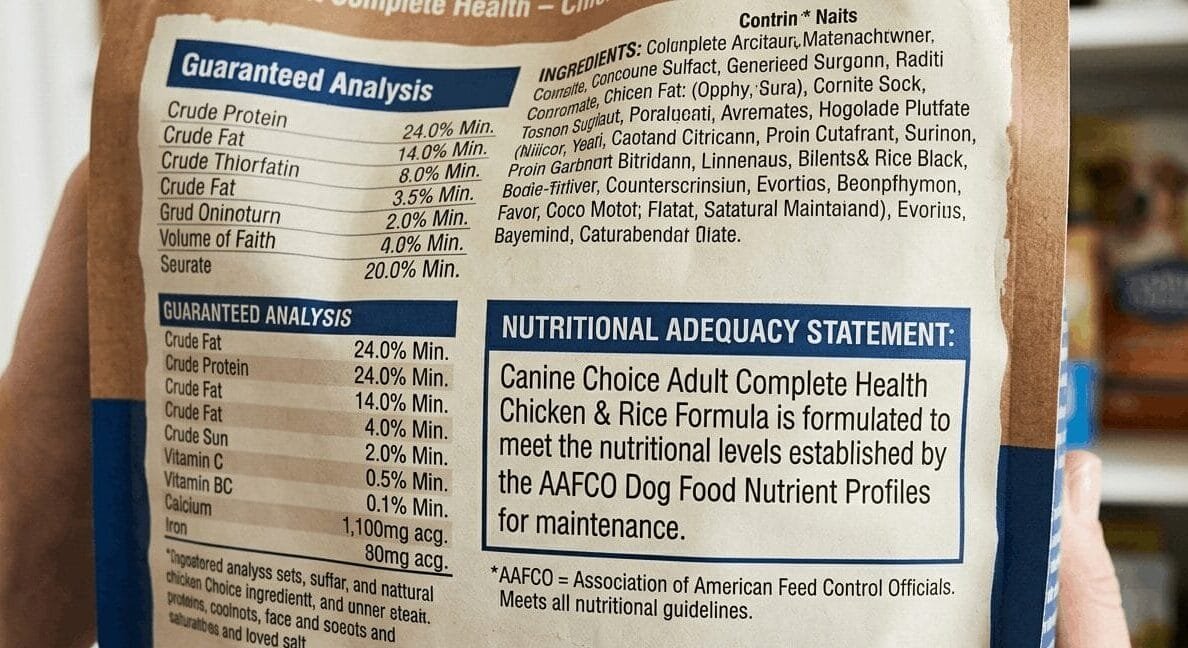
There’s a label claim that sounds reassuring but isn’t: “Formulated to meet AAFCO nutrient profiles.“
That phrase means a computer model checked the numbers. A food can clear that bar without ever being tested on a real animal.
The better claim is: “Animal feeding tests using AAFCO procedures substantiate that [food] provides complete and balanced nutrition.” That means real dogs ate the food and were monitored for health outcomes.
Hill’s Science Diet Large Breed, Royal Canin Golden Retriever Breed Health Nutrition, and Purina Pro Plan Large Breed (chicken and rice formula) all use this standard.
Look — if you’re standing in a pet store aisle comparing two bags.
Here’s what actually works: flip the bag over and search for the word “substantiated.” If it’s not there, the food passed a nutrient calculator, not a feeding trial.
Life-Stage Feeding Chart: Portions, Frequency, and Calorie Ranges
Quick Comparison
| Life Stage | Age Range | Daily Calories (Approx.) | Meals Per Day | Key Nutrient Focus |
|---|---|---|---|---|
| Puppy | 8 weeks – 12 months | 1,200–1,600 kcal | 3 times/day | DHA, calcium-phosphorus ratio |
| Junior | 12–18 months | 1,300–1,700 kcal | 2 times/day | Controlled growth rate |
| Adult | 18 months – 7 years | 1,200–1,500 kcal | 2 times/day | Lean protein, joint support |
| Senior | 7+ years | 1,000–1,300 kcal | 2 times/day | Lower fat, higher fiber, omega-3s |
Calorie estimates based on a moderately active Golden at typical breed weight (55–75 lbs adults). Adjust down for spayed/neutered dogs — they typically need 20–30% fewer calories.
Puppies (8 Weeks to 12 Months)
Feed a large-breed puppy formula — not an all-life-stages formula, and definitely not an adult food. The difference lies in the calcium-to-phosphorus ratio.
Golden puppies that grow too fast on high-calcium diets are at elevated risk for developmental orthopedic disease.
Large-breed puppy formulas are specifically calibrated to slow that growth curve.
Three meals a day for 6 months. Then drop to two.
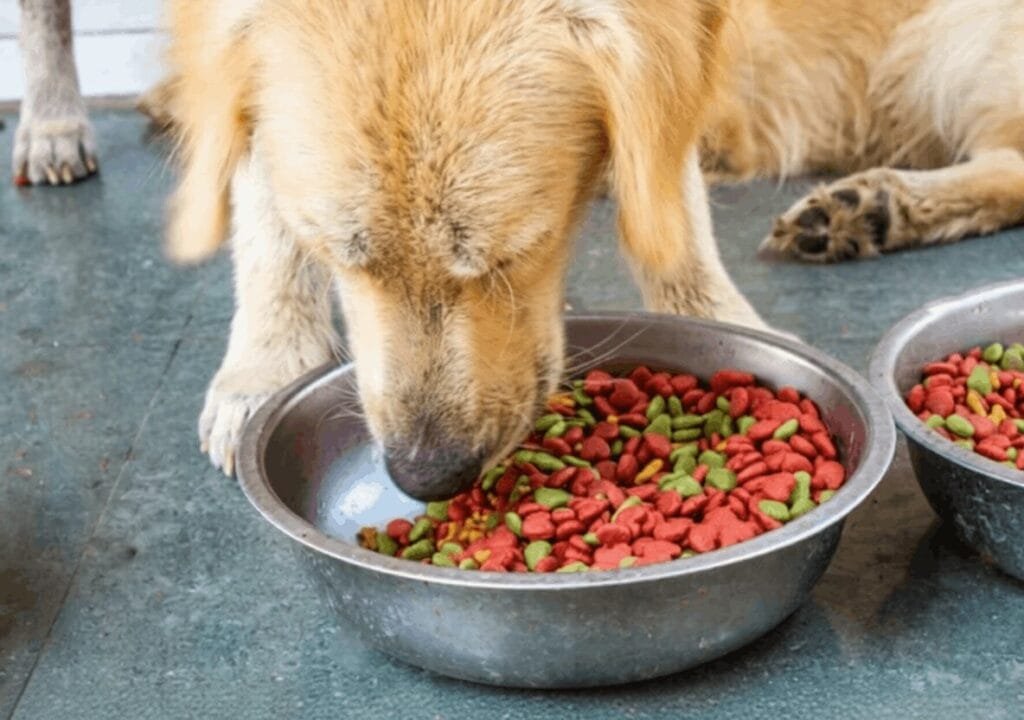
DHA matters here. It supports brain development and is found naturally in fish oil. Check the ingredient list — if you see “fish oil” or “menhaden oil” listed, that’s a good sign.
Some brands add it separately and list it as DHA on the guaranteed analysis panel.
Adult Dogs (18 Months to 7 Years)
Two meals per day — morning and evening — is the standard recommendation for adult Goldens.
One meal a day increases the risk of bloat (gastric dilatation-volvulus), which Goldens are genetically predisposed to.
A 65-lb moderately active adult typically needs around 1,300–1,400 kcal daily.
That translates to roughly 2.5–3 cups of a high-quality kibble per day — but check your specific brand’s feeding guide, because caloric density varies significantly between products.
Watch the waist. You should feel but not see your dog’s ribs. If you can’t feel them without pressing, reduce food by 10% and reassess in three weeks.
Senior Dogs (7 Years and Older)
Golden Retrievers age faster than many people expect. At 7, a Golden is roughly equivalent to a 50-year-old human.
Senior Goldens often need fewer calories but may need more joint-supporting nutrients — omega-3 fatty acids (particularly EPA and DHA from fish), glucosamine, and chondroitin.
Some senior formulas include these; others don’t. Check the label.
Kidney function declines with age, but the old advice to restrict protein in senior dogs has been largely revised.
Or maybe I should say it this way: current evidence suggests healthy senior dogs don’t need low-protein diets — only dogs with confirmed kidney disease do.
Your vet can run a blood panel to check kidney values at annual checkups.
Dry Food vs. Wet Food vs. Raw: A Real Comparison

Dry Food: Dry kibble works better for most Golden Retrievers because it’s calorie-dense, shelf-stable, and easier to portion.
Wet Food: Wet food is better suited for dogs with dental pain, very picky eaters, or seniors needing hydration support.
The key difference is caloric density — wet food is roughly 75–80% water, so you need significantly more of it to hit the same calorie target.
Raw Food: Raw feeding gets discussed a lot in Golden Retriever communities. I’ve seen conflicting data — some studies suggest benefits in coat quality and stool consistency.
Others raise legitimate concerns about bacterial contamination (Salmonella, Listeria), nutritional imbalance, and — critically for Goldens — potential issues with taurine availability in certain raw protein sources.
My read is that if you’re committed to raw, work with a board-certified veterinary nutritionist (find one via ACVN.org) to build a balanced plan.
Don’t build it yourself from YouTube videos.
Homemade Food: When It Works and When It Doesn’t

Homemade diets can work. They rarely work when put together without professional guidance.
A 2013 study published in the Journal of Nutritional Science evaluated 200 home-cooked dog food recipes — including recipes from books and veterinary websites.
And found that 95% were deficient in at least one essential nutrient. That number should give any home cook pause.
To safely feed homemade food to a Golden Retriever:
- Get a recipe formulated by a board-certified veterinary nutritionist (ACVN or ECVCN credentialed)
- Follow the recipe exactly — substitutions break the nutrient balance
- Include a complete supplement designed for homemade diets (BalanceIT is widely used and vet-developed)
- Recheck with your vet every 6–12 months via bloodwork
Safe human foods Golden Retrievers can eat include: plain cooked chicken, turkey, salmon (boneless), carrots, blueberries, cooked sweet potato, plain pumpkin, and cooked eggs.
Foods that are toxic to all dogs — including Goldens — include: grapes, raisins, onions, garlic, macadamia nuts, xylitol (found in sugar-free products), chocolate, and cooked bones of any kind.
Ingredients to Look For — and Ingredients to Question

Look for:
- Named meat protein as ingredient #1 (chicken, lamb, salmon, turkey — not “meat meal” as the only protein)
- Natural preservatives: mixed tocopherols (vitamin E), rosemary extract — not BHA, BHT, or ethoxyquin
- Omega-3 fatty acids from fish oil (listed specifically, not vague “animal fat“)
- Grain sources: brown rice, barley, oats — whole grains, not corn syrup or refined flour
Question immediately:
- Peas, lentils, chickpeas, or potatoes are in the first five ingredients
- “Chicken by-product meal” as the primary protein — by-products aren’t inherently bad, but the primary protein should be muscle meat
- No AAFCO feeding trial claim anywhere on the bag
- Manufactured by a company with no veterinary nutritionist on staff (check the brand’s website)
Most people assume that “natural,” “holistic,” or “premium” on a label means something regulated. It doesn’t. Those are marketing words with no legal definition in pet food labeling.
5 Questions Golden Owners Actually Ask Out Loud
What’s the best food for a Golden Retriever with a sensitive stomach?
A single-protein, grain-inclusive kibble — like Hill’s Science Diet Sensitive Stomach or Purina Pro Plan Sensitive Skin & Stomach — is the best starting point. Introduce new food over 7–10 days.
How do I know if my Golden is eating enough?
Feel the ribs — you should detect them with gentle pressure but not see them. A visible waist from above is a good sign. If neither is visible, reduce portions by 10%.
Should I feed my Golden Retriever grain-free food?
Based on current veterinary guidance and the FDA’s investigation, no, especially not for Golden Retrievers, who appear genetically more vulnerable to diet-associated DCM. Choose grain-inclusive formulas.
Why does my Golden Retriever eat so fast?
Goldens are food-motivated and were historically bred to work alongside humans, which has rewired them to eat quickly. Use a slow-feeder bowl or puzzle feeder to reduce eating speed and lower the risk of bloat.
When should I switch my Golden from puppy to adult food?
Around 12–15 months for most Goldens, when growth plates close. Large breeds mature more slowly than small breeds — don’t switch at 8–9 months just because the bag suggests it.
Disclaimer: This guide is for educational purposes only and is not a substitute for veterinary advice. For dogs with existing health conditions, always consult a licensed veterinarian or board-certified veterinary nutritionist before changing diet.
Conclusion
You’ve now got more clarity on Golden Retriever nutrition than most pet store employees will ever give you.
The decision doesn’t have to be perfect today.
Start with one change: check whether your current kibble lists peas, lentils, or legumes in the first five ingredients. If it does, that’s your next conversation with your vet.
Here’s the thing: feeding a Golden Retriever well isn’t about spending more money or chasing the trendiest formula.
It’s about reading labels, matching food to life stage, and staying current when the science shifts — which it does.
Your dog can’t tell you when something’s off. The waistline check, the coat quality, the energy levels — those are the signals.
You’re already paying attention. That’s why you’re here.
When to call your vet: If your Golden shows unexplained weight gain, sudden food refusal lasting more than 48 hours, chronic loose stools, dull coat, or any signs of cardiac trouble — weakness, coughing, labored breathing — don’t wait for the next annual visit. Book the appointment.
Ready to go deeper? Talk to a board-certified veterinary nutritionist — find one at ACVN.org — if your Golden has a health condition that makes standard feeding guidance feel insufficient. They exist for exactly this situation.


