


A raw food diet for golden retrievers means feeding raw meat, bones, organs, and sometimes vegetables instead of processed kibble.
It’s also called BARF (Biologically Appropriate Raw Food).
Proponents say it mirrors what dogs would eat in the wild. The science on that claim is messier than most blogs let on.
This guide covers what raw feeding actually involves, the real risks, and how to do it safely if you decide it’s right for your dog.
It does not replace a conversation with your vet, especially if your golden has an existing health condition.
What a Raw Food Diet Actually Looks Like
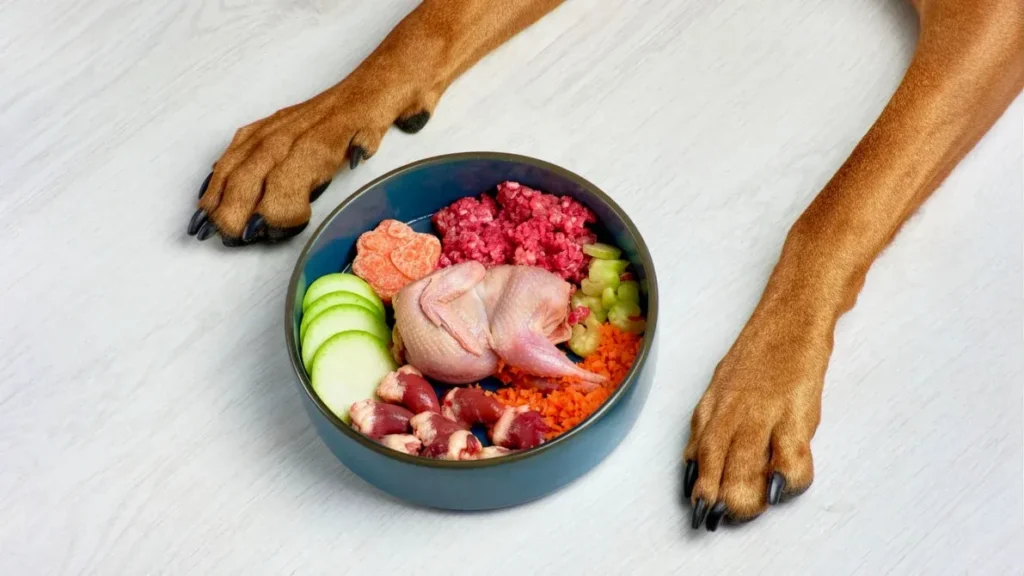
A raw diet typically consists of about 80% muscle meat, 10% bone, and 10% organ (half of which is liver).
Some owners add fruits or vegetables. Others stick strictly to meat and bone.
There’s no single “correct” formula — there are several competing ones, and that’s part of what confuses new owners.
According to the Cornell University Riney Canine Health Center, raw diets carry documented risks around bacterial contamination and nutritional imbalance, even though many owners report visible improvements in coat and digestion.
That gap — between what owners see and what researchers can measure — is the core tension in this whole topic.
Here’s The Thing: Most golden retriever raw-feeding articles are written by raw food brands.
That’s not inherently bad, but it means the risk section often gets a paragraph rather than the attention it deserves.
Is Raw Food Safe for Golden Retrievers? What the Evidence Says
A 2022 study published in Vet Record tested commercial raw pet food samples in the UK and found pathogenic bacteria — including Salmonella and E. coli — significantly more often than in processed dog food.
That doesn’t mean every raw meal is contaminated.
It means the margin for error is smaller than kibble feeding, particularly around handling, storage, and sourcing.
Golden retrievers don’t have a unique vulnerability to raw food beyond what applies to dogs generally.
They are, however, a breed prone to certain allergies and digestive sensitivities, which is often why owners consider raw feeding in the first place.
Quick Comparison
| Option | Best For | Key Benefit | Limitation |
|---|---|---|---|
| DIY Raw (homemade) | Owners with time and nutrition knowledge | Full control over ingredients | High risk of nutrient imbalance if unbalanced |
| Commercial Raw (e.g., Vital Essentials, Primal) | Busy owners wanting raw without formulating | AAFCO-balanced, pre-portioned | More expensive than DIY |
| Freeze-Dried Raw (e.g., K9 Kuisine) | Travel, easy storage | Long shelf life, less mess | Requires rehydration, pricier per pound |
Some experts argue that homemade raw food gives the most nutritional control.
That’s true — if you’re working with a veterinary nutritionist to balance the recipe.
Most owners aren’t, and that’s where deficiencies creep in over months, not days.
How Much Raw Food Should a Golden Retriever Eat?
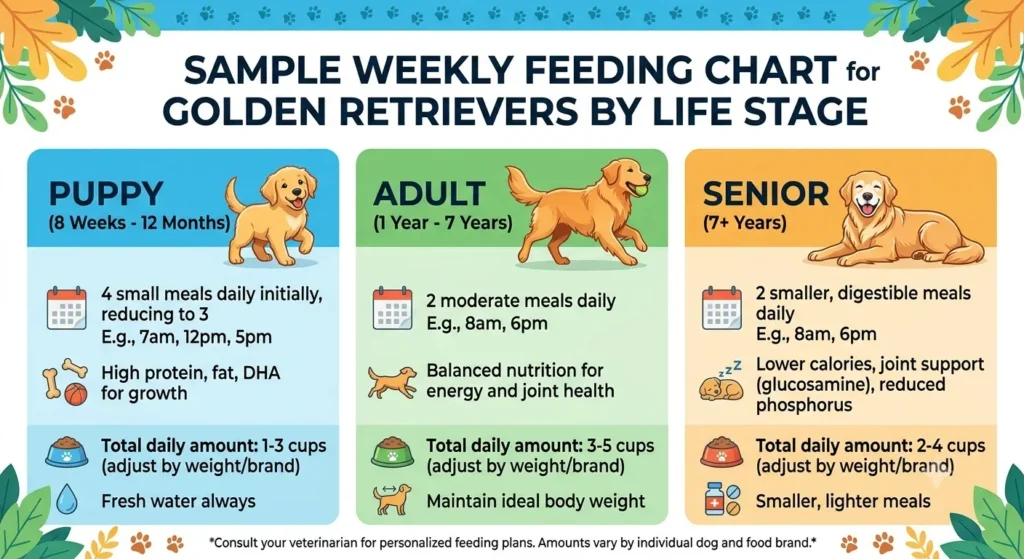
To calculate a starting portion, follow these steps:
- Take your dog’s ideal body weight in pounds.
- Multiply by 2–3% for adult maintenance.
- Multiply by 4–6% for active puppies under 12 months.
- Split the daily total into 2 meals for adults, 3–4 for puppies.
A 65-pound adult golden eating at 2.5% body weight needs roughly 1.6 pounds of food daily.
Puppies need more relative to their size because they’re growing fast and burning through energy just existing.
Seniors often need less — sometimes 1.5–2% — especially if they’re less active or managing joint issues.
What Most Raw Feeding Guides Skip
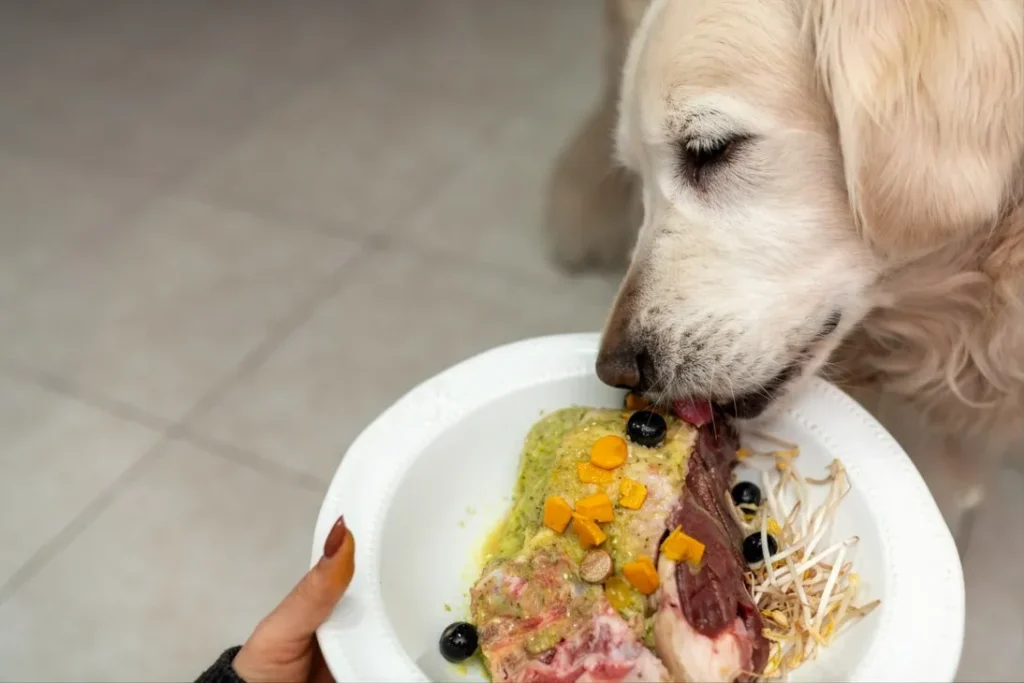
What most guides skip is the transition period. Dogs switching from kibble to raw can get loose stool, vomiting, or constipation for 1–2 weeks as gut bacteria adjust.
That’s normal. It’s also the point where most owners panic and quit.
Or maybe I should say it this way: the first two weeks are a test of patience, not proof that the diet is wrong.
Start with a single protein source. Add bone gradually. Watch stool consistency daily.
Look — if you’re dealing with a golden that already has a sensitive stomach, transition slower than the standard advice suggests.
Ten to fourteen days minimum, one new protein at a time.
Common Mistakes Owners Make With Raw Feeding

Users who’ve tried raw feeding for the first time often report skipping organ meat because it’s unappealing to handle — which throws off the whole nutrient ratio.
Others overfeed bone, leading to constipation.
A smaller group under-researches calcium-phosphorus ratios entirely, which, over months, can cause real skeletal problems in growing puppies.
I’ve seen conflicting data on whether raw-fed dogs genuinely live longer or healthier than kibble-fed dogs — some breed surveys say yes, but peer-reviewed studies are far less conclusive.
My Read: The coat and digestion improvements owners report are real and worth something, but they’re not the same thing as proven longevity benefits.
This article covers home and commercial raw feeding for healthy adult and puppy goldens. It does not address raw feeding for dogs with kidney disease, pancreatitis, or immunosuppression — those cases need direct veterinary guidance, full stop.
Raw Food Diet for Golden Retrievers: Quick Answers
What’s the best raw food brand for golden retrievers?
Vital Essentials, Primal Pet Foods, and K9 Kuisine are commonly recommended for AAFCO-balanced commercial raw formulas.
How do I switch my golden retriever to raw food safely?
Introduce one new protein at a time over 10–14 days, watching for digestive upset before adding more.
Should I feed my golden retriever raw bones?
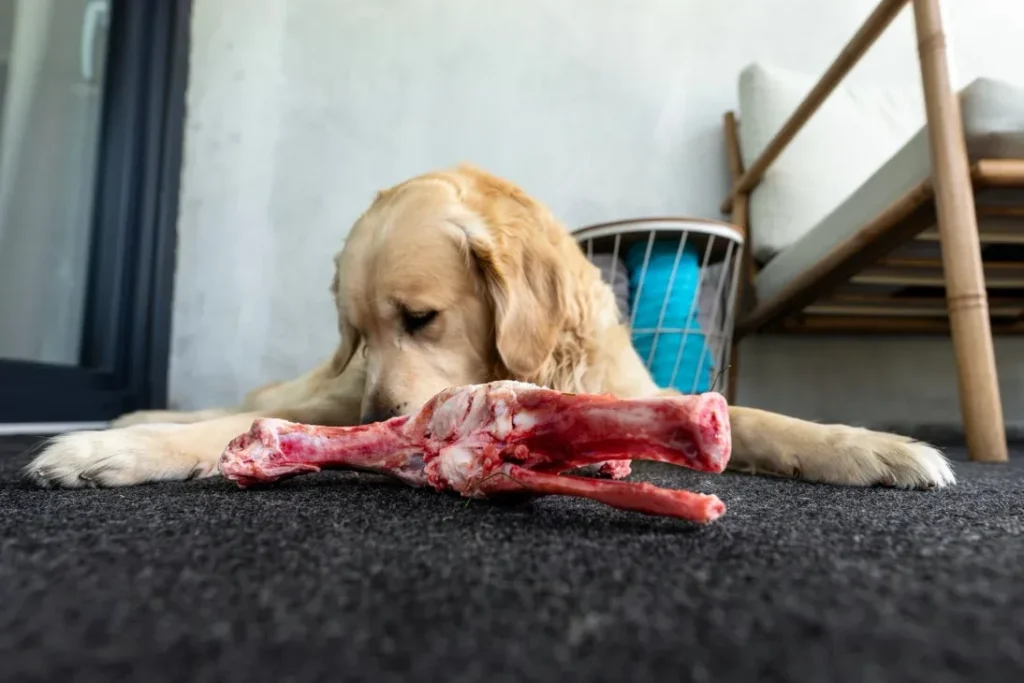
Raw, never-cooked bones are generally safer — but supervise feeding and avoid weight-bearing bones that can fracture teeth.
Why does my golden retriever have loose stool after starting raw food?
It’s typically a normal gut-adjustment response during transition, lasting 1–2 weeks in most dogs.
When should I avoid raw feeding entirely?
If your dog has kidney disease, pancreatitis, or a compromised immune system, talk to your vet before switching.
This isn’t veterinary advice. Talk to your vet before changing your dog’s diet, especially with existing health conditions.
Conclusion
A raw food diet for golden retrievers isn’t inherently right or wrong — it’s a trade-off. You get more control over ingredients and, for many dogs, a better coat and digestion.
You give up the convenience of kibble and take on real responsibility around sourcing, handling, and nutritional balance.
If you’re going to try it, start with a commercial raw formula from a brand like Vital Essentials or Primal rather than building your own recipe from scratch.
It removes the biggest risk — nutrient imbalance — while you learn how your dog responds.
Watch the transition period closely. Talk to your vet before you start, especially if your golden has any existing health issues.
The dogs that do best on raw aren’t the ones with the most expensive setup. They’re the ones whose owners paid attention and adjusted slowly.


