

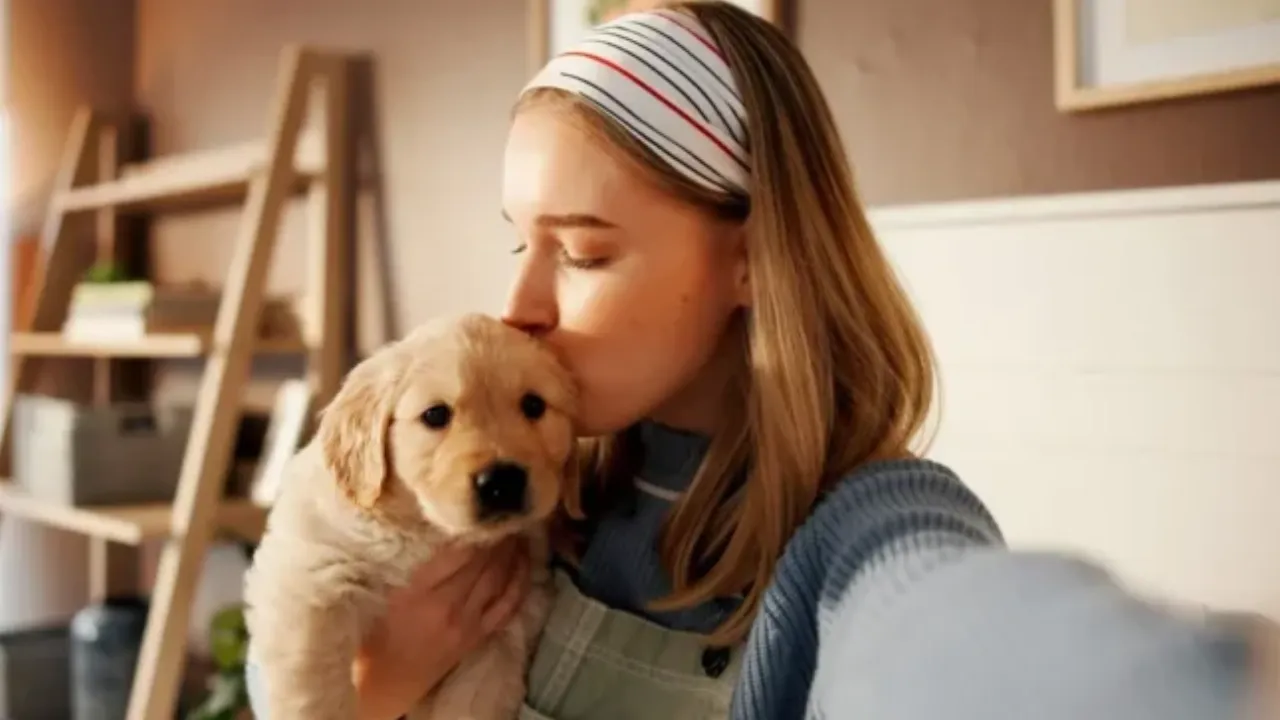
You brought home eight pounds of golden fluff, and now every forum, breeder, and vet tech is telling you something slightly different.
How to take care of a golden retriever puppy comes down to four overlapping systems — feeding, health, socialization, and training.
That all needs attention in the same narrow window, roughly weeks 8 through 16.
Miss that window and you’re not starting over, but you are working harder for the same result.
This guide covers what to do and when, in the order it actually needs to happen.
It does not replace your vet — it’s a framework to bring to your first appointment, not a substitute for one.
What Does Golden Retriever Puppy Care Actually Involve?

Golden retriever puppy care refers to the combination of feeding, veterinary scheduling, socialization, and basic training a puppy needs between roughly 8 weeks and 6 months of age.
The goal isn’t just survival — it’s setting the physical and behavioral foundation for a dog that will live 10 to 12 years.
Here’s the thing: most guides split these four systems into separate articles.
Real puppy care doesn’t work that way.
Your puppy’s fourth vet visit overlaps with the tail end of the socialization window, and the exact week you’re supposed to switch feeding amounts.
Treating them separately is why so many new owners feel like they’re always one step behind.
The First Week Home
Keep it boring. A new environment is already overwhelming; your puppy doesn’t need a party on top of it.
Set up a designated potty spot outside and take your puppy there immediately after waking, eating, and playing — golden retriever puppies have very little bladder control before 12 weeks.
Introduce the crate as a good place, not a timeout: toss treats inside, feed meals in it, and let the puppy wander in and out with the door open before you ever close it.
If you’re switching foods from what the breeder used, wait until the puppy is settled, then transition gradually over 7 to 10 days to avoid stomach upset.
Feeding: How Much and How Often
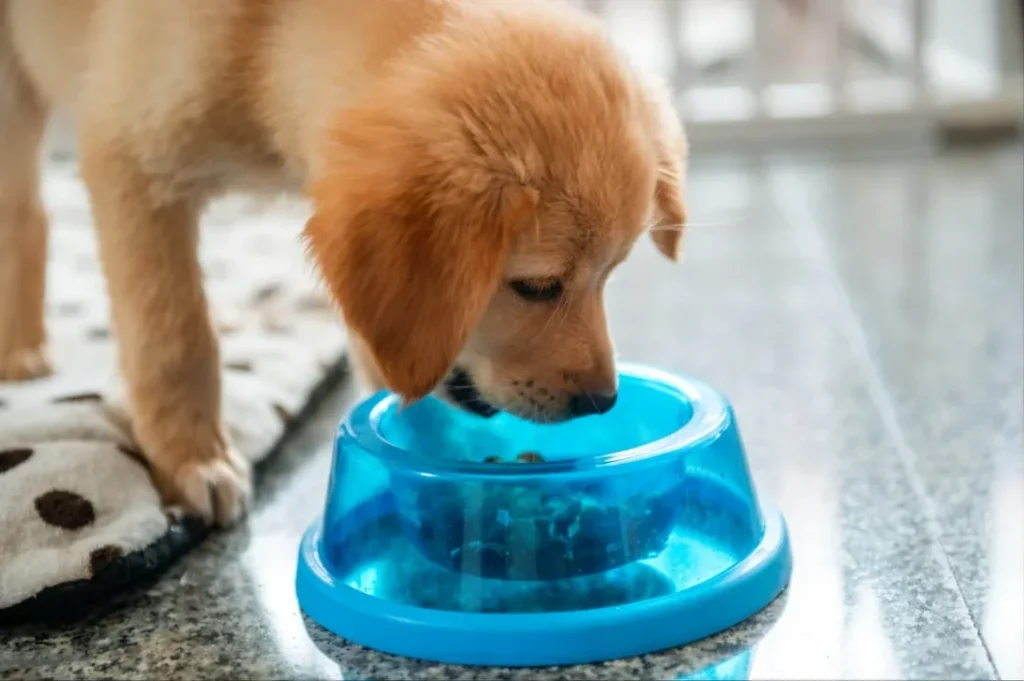
To feed a golden retriever puppy correctly, follow these steps:
- Choose a large-breed puppy formula, not standard puppy food.
- Feed 3 meals a day from 8 to 16 weeks, then 2 meals after 6 months.
- Follow the bag’s weight-based chart, adjusting as the puppy grows.
This is where breed-specific advice actually matters, and it’s the biggest gap in most competitor articles.
Golden retrievers are prone to hip and elbow dysplasia, and overfeeding — or feeding a food with the wrong calcium-to-phosphorus ratio — accelerates that risk during the rapid growth phase between 3 and 8 months.
Large-breed puppy formulas like Purina Pro Plan Large Breed Puppy or Royal Canin Golden Retriever Puppy are formulated with controlled calcium specifically to slow bone growth to a safer rate.
Standard puppy food, even a good one, usually isn’t.
Most people assume more calcium means stronger bones.
The data says otherwise — excess calcium during this growth window is linked to skeletal problems in large breeds, not prevented by them.
Quick Comparison
| Option | Best For | Key Benefit | Limitation |
|---|---|---|---|
| Large-breed puppy formula | Golden retrievers, Labs, other giant/large breeds | Controlled calcium slows joint stress | Costs more than standard puppy food |
| Standard puppy food | Small/medium breeds | Higher calorie density for fast metabolism | Wrong calcium ratio for large-breed joints |
| Raw/homemade diet | Owners working with a vet nutritionist | Full ingredient control | Easy to get the calcium/phosphorus ratio wrong without guidance |
Read More:
- Raw Food Diet for Golden Retrievers: Secret Rules That Work
- Golden Retriever Diet & Nutrition: Complete Feeding Guide by Life Stage
- How Much Does a Golden Retriever Eat? Feeding Guide by Age and Weight
Vaccines, Vet Visits, and the Timing Problem Nobody Explains Well
According to the American Veterinary Society of Animal Behavior, puppies should begin socialization before their vaccine series is complete, prioritizing low-risk environments over waiting for full protection.
That single guideline resolves most of the “is it safe to take my puppy outside” anxiety new owners feel.
Your puppy will typically need vaccine boosters at 8, 12, and 16 weeks, plus a rabies shot around 12-16 weeks, depending on your vet’s protocol.
Bring high-value treats to every visit — a calm, treat-filled early vet experience makes future visits dramatically easier.
This is medical guidance in general terms; your vet will set the exact schedule based on your puppy’s health and local disease risk.
Socialization: The Window That Closes Fast
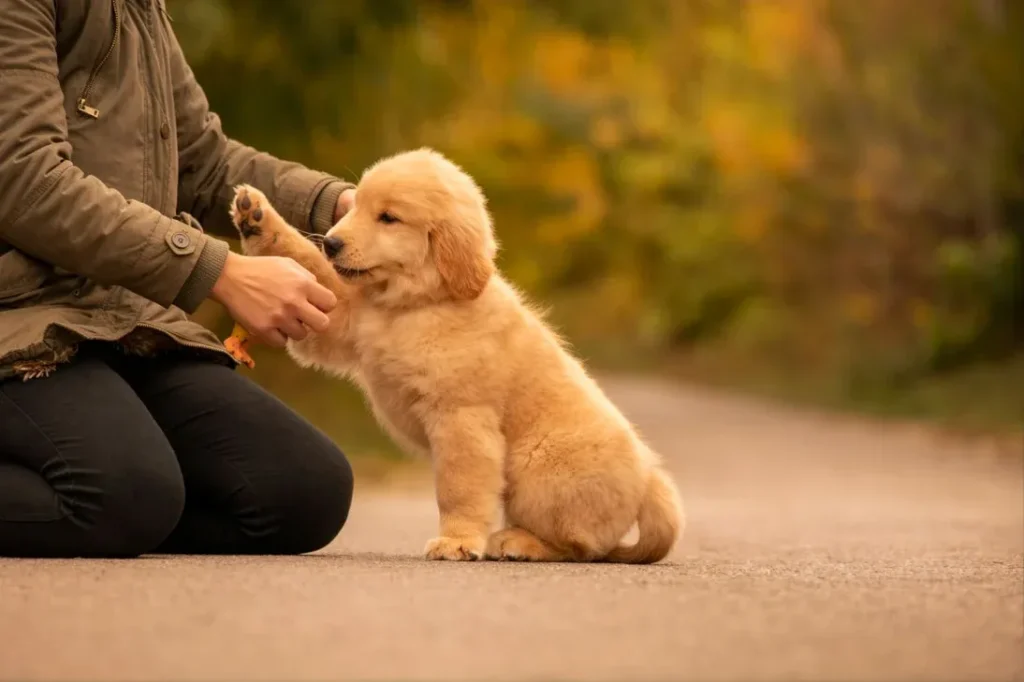
The critical socialization period for a golden retriever puppy runs roughly from 8 to 16 weeks of age, and experiences during this window shape adult temperament disproportionately compared to any later stage.
What most guides skip is that this window is closing at the same time your puppy is only partially vaccinated.
Which is why low-risk exposure (carrying the puppy in public, controlled visits from vaccinated dogs, car rides) matters more than waiting for the “all clear.” Rockvale Puppies
Quality beats quantity here.
One overwhelming trip to a crowded dog park can create lasting fear; five calm, five-minute exposures to new surfaces, sounds, and people build lasting confidence instead.
Aim for a short list each week: a person in a hat, a vacuum running in another room, a walk on tile, then grass,s then gravel, a car ride under ten minutes.
Small and frequent wins over big and occasional.
Read More:
- Best Diet for Golden Retriever Health Improvement: 2026 Vet Guide
- Improve Your Golden Retriever’s Diet Naturally In 5 Steps
- Ideal Diet for a Golden Retriever: Full Life-Stage Nutrition Guide
Training Timeline: What to Teach and When

Golden retrievers are eager to please, which makes them easy to train — and easy to accidentally undertrain, because owners assume the dog will “just figure it out.” It won’t, not reliably.
To build a training foundation, follow this sequence:
- Start basic cues (sit, come, leave it) at 8 weeks.
- Enroll in puppy kindergarten once your vet clears group classes.
- Layer in bite inhibition and impulse control by 4 months.
Most golden retrievers are reliably house-trained by 4 to 6 months with consistent routines, though some take longer — and that’s normal, not a failure of the dog or the owner.
The AKC’s S.T.A.R. Puppy program is worth considering around 4-5 months; it’s a structured six-week class capped off with an evaluation test on skills like accepting handling and tolerating a leash.
And it gives first-time owners a clear benchmark, rather than having to guess whether training is “on track.”
Some trainers argue that group puppy classes before full vaccination are too risky.
That’s a fair concern in areas with high parvo prevalence.
But most reputable facilities require proof of at least the first round of shots and disinfect thoroughly between classes.
This makes the socialization benefit worth the calculated risk for most families.
Read More:
- Is Chicken Good for a Golden Retriever’s Diet? Vet’s Truth
- Golden Retriever Health Secrets Every Owner Must Know
- Best Food to Feed a Golden Retriever: Vet-Backed Guide for Every Life Stage
Grooming and Coat Care
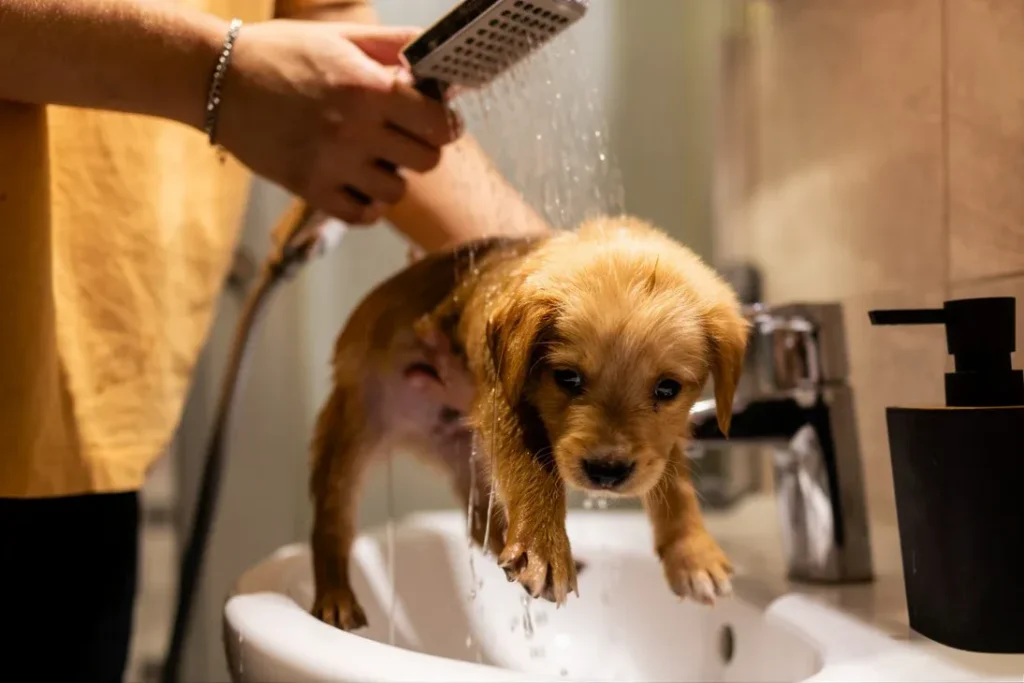
Goldens have a double coat that blows twice a year — once in spring, once in fall — and needs brushing several times a week even outside those periods.
Start early: handle paws, ears, mouth, and tail during calm moments so nail trims and teeth cleaning don’t become a wrestling match later.
Never shave a golden retriever’s coat.
It regulates temperature in both directions, and shaving disrupts that.
Read More:
- How Much Protein Does a Golden Retriever Need Daily (With Real Gram Numbers)
- Balanced Diet for a Golden Retriever: Full Feeding Guide
- Golden Retriever Training: Complete Puppy-to-Adult Guide (With Timeline)
FAQ’s
What’s the best age to start training a golden retriever puppy?
Start basic cues like sit and come at 8 weeks — waiting until “they’re old enough” wastes the most trainable window of their life.
How do I know if I’m feeding my golden retriever puppy too much?
Check body condition monthly — ribs should be easily felt but not visible; ask your vet to confirm at each visit.
Should I socialize my puppy before all vaccines are done?
Yes, in low-risk settings — carrying them in public or hosting vaccinated dogs is safer than waiting and missing the window entirely.
Why does my golden retriever puppy chew everything?
Teething and exploration drive it — redirect to appropriate chew toys rather than punishing, since scolding can create fear without stopping the behavior.
When should I switch my golden retriever puppy’s food?
Most large-breed puppy formulas transition to adult food around 12-15 months, once growth plates have mostly closed.
Conclusion
Golden retriever puppy care isn’t complicated — it’s just four things happening at once during a narrow window.
Feed a large-breed formula, keep vet visits on schedule, socialize before vaccines are even finished, and start training the day your puppy comes home.
Miss one piece and the others get harder; keep them roughly in sync and the first six months go a lot smoother than the forums make it sound.
Look — if you’re staring down a feeding chart at 11 pm wondering if you’re doing this right, you probably are.
Most of this is consistency, not precision.
Get the big things right (correct food, on-time boosters, low-risk socialization, gentle handling), and your puppy will forgive the rest.
The payoff isn’t immediate.
It shows up a year from now, when you have a calm, confident dog who’s comfortable at the vet, good with strangers, and easy to live with — instead of one you’re still managing around.
This guide covers the first six months of golden retriever puppy care. It does not cover breeding, show-dog conditioning, or senior-dog health — those need a different resource entirely.
